 FishKillFlea
· Basics · 6 min read
Fishing License Cost Guide 2026 — All 50 States Compared
Reviewed by FishKillFlea Editorial Team
Complete breakdown of fishing license costs across all US states. Compare resident, non-resident, annual, and daily license prices for 2026.
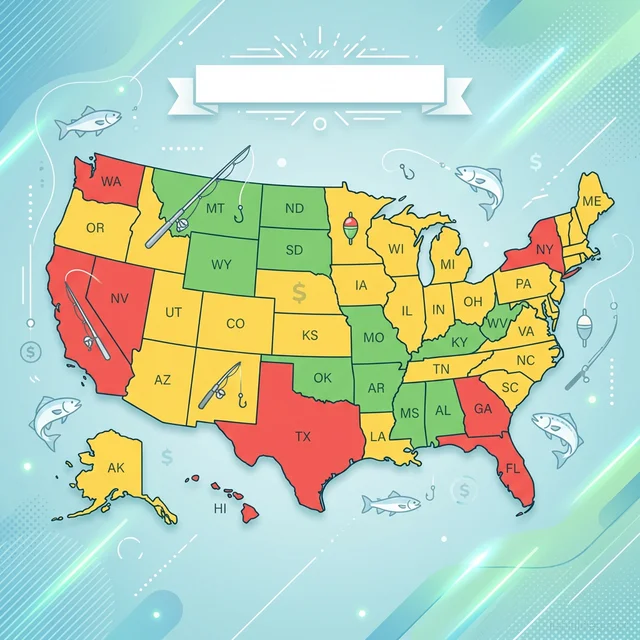
The average US fishing license costs $25 for residents and $65 for non-residents annually, but prices range from $5 to $150+ depending on the state. Whether you are a resident buying your annual permit or a visitor picking up a one-day pass for a weekend trip, understanding the pricing landscape helps you budget accurately and avoid overpaying. This guide provides a thorough breakdown of what recreational anglers actually spend in 2026, including base licenses, required endorsements, and hidden fees most guides don’t mention.
How Fishing License Pricing Works
Every state wildlife agency sets its own fee schedule. Revenue from fishing license sales funds fish stocking programs, habitat restoration, boat ramp maintenance, and game warden salaries. The Federal Aid in Sport Fish Restoration Act (Dingell-Johnson Act) also matches state fishing license revenue with federal dollars, meaning higher license sales directly increase conservation funding in your state.
Prices are influenced by several factors: the state’s cost of living, size of its fisheries management program, number of licensed anglers, and the species available. States with world-class trout or salmon fisheries — like Alaska, Montana, and Colorado — tend to charge premium rates, especially for non-resident licenses.
Average Fishing License Costs
Here’s a quick overview of what fishing licenses typically cost across the US:
| License Type | Low End | Average | High End |
|---|---|---|---|
| Resident Annual Freshwater | $10 | $25 | $55 |
| Non-Resident Annual Freshwater | $30 | $65 | $150 |
| Resident Daily | $3 | $8 | $15 |
| Non-Resident Daily | $5 | $15 | $30 |
| Resident Lifetime | $200 | $500 | $1,000+ |
Use our Cost Estimator tool to calculate the exact cost for your state, license type, and residency status.

KastKing Centron Spinning Reel
Budget-friendly 9+1 ball bearing reel. Lightweight graphite frame, great for beginners.
Affiliate link · Prices may vary
Most Affordable States for Fishing
These states offer some of the lowest fishing license fees in the country, making them excellent choices for budget-conscious anglers or those looking to try a neighboring state’s waters:
- Missouri — Resident annual: $12
- Wisconsin — Resident annual: $20
- Iowa — Resident annual: $22
- Kentucky — Resident annual: $23
- Indiana — Resident annual: $23
Several of these states also run generous free fishing day programs, letting you test the waters before committing to a full license purchase.
Most Expensive States for Fishing
Premium fishing destinations charge more because they manage high-demand fisheries with significant stocking and enforcement costs. Non-resident fees in these states reflect the quality and exclusivity of the fishing experience:
- Montana — Non-resident annual: $111
- Alaska — Non-resident annual: $100
- Wyoming — Non-resident annual: $102
- Colorado — Non-resident annual: $97
- Hawaii — Non-resident annual: $50 (with additional endorsements)
If you plan to fish in one of these states multiple times per year, compare the annual versus daily license cost. In Alaska, a single non-resident day license runs about $15 — so the annual license breaks even after about seven trips.

Thkfish Fishing Accessories Kit
Complete terminal tackle kit with hooks, sinkers, swivels, and bobbers. Everything in one box.
As an Amazon Associate, we earn from qualifying purchases. Prices may vary.
Additional Permits and Endorsements
Your base fishing license is rarely the only cost. Most anglers need at least one additional permit, depending on the species and water type:
- Trout stamp — $5–$15 in most states; required for trout fishing in about 20 states
- Saltwater endorsement — $5–$30; required in coastal states where freshwater and saltwater licenses are separate
- Second rod permit — $5–$15; allows fishing with two rods simultaneously
- Special species tags (salmon, steelhead) — $10–$50; required in Pacific Northwest states
- Hunting + fishing combo — often $10–$20 cheaper than buying each separately
Always check your state’s full fee schedule before purchasing. You may discover that a combination license or annual pass is cheaper than buying individual endorsements.
Real-World Cost Scenarios
Scenario 1: Weekend Bass Fishing in Texas
You’re a Texas resident planning a Saturday-Sunday bass fishing trip at a local reservoir. Your costs:
- Texas resident annual fishing license: $30
- No additional stamps needed for freshwater bass
- Total: $30 for the entire year
That same license covers every freshwater outing for the rest of the season — making it one of the best values in outdoor recreation.
Scenario 2: Non-Resident Trout Trip to Colorado
You live in Kansas and want to fly fish Gold Medal Waters in Colorado for a long weekend:
- Colorado non-resident 1-day license: $18.83 × 3 days = $56.49
- Colorado non-resident annual: $98.63
- No separate trout stamp needed (included in CO license)
- Better deal: buy the annual if you’ll visit twice or more
Use our License Finder to compare options for your destination state.

Ugly Stik GX2 Spinning Rod
Durable graphite and fiberglass construction. Perfect for beginners and experienced anglers.
Affiliate link · Prices may vary
Money-Saving Tips
1. Buy a Lifetime License
If you plan to fish in your home state for years to come, a lifetime license often pays for itself within 10–15 years. Some states like Texas offer lifetime licenses at steep discounts for children — a popular gift from parents and grandparents.
2. Take Advantage of Free Fishing Days
Most states offer 1–4 free fishing days per year when no license is required. These are perfect for introducing family members to the sport before investing in gear and licenses.
3. Look for Combination Licenses
Many states offer hunting + fishing combination licenses at a significant discount compared to buying separately. If you enjoy both activities, the savings typically range from $10 to $30.
4. Military and Senior Discounts
Active-duty military, veterans, seniors, and youth often qualify for free or reduced-cost licenses. In many states, military personnel stationed in-state pay resident rates regardless of their home state.
5. Fish in Affordable Neighboring States
If you live near a state border, compare non-resident daily license costs — some neighboring states offer exceptional value. A non-resident daily fishing permit in Missouri costs just $9, making it one of the cheapest day-trip destinations in the country.
6. Buy Online for Convenience
Buying directly online through your state’s wildlife portal gives you an instant digital license. Most states charge a small online convenience fee ($1–$3) for credit card processing, but retail stores like Walmart charge zero markup.
Frequently Asked Questions
How much does a fishing license cost on average? The national average for a resident annual freshwater fishing license is about $25. Non-residents pay roughly $65 on average. Daily licenses range from $5 to $30 depending on the state and residency status. Use our Cost Estimator for an exact quote.
Are fishing license fees refundable? Generally, no. Nearly all states have strict no-refund policies once a fishing license has been issued. A few states allow cancellation within 24 hours of purchase if the license has not been used, but this is rare. If you lose your license, most states offer a free replacement rather than a refund.
Do children need a fishing license? Most states exempt children under 16 from the fishing license requirement. Some states set the cutoff at 12 or 14. Visit our age requirements guide for a complete state-by-state breakdown of age exemptions.
Is a fishing license tax-deductible? Recreational fishing licenses are not tax-deductible for personal use. However, if you hold a commercial fishing license or use fishing as part of a legitimate business (such as a fishing guide service), the license fee may be deductible as a business expense. Consult a tax professional for guidance.
Why do non-resident fishing licenses cost so much more? Non-resident fees are higher because residents have already contributed to the state’s conservation efforts through sales taxes, property taxes, and other state funding mechanisms. The premium non-resident rate ensures out-of-state visitors pay their fair share for using the fishery resources. Learn more about why fishing licenses exist and how the revenue is used.
For state-specific pricing, use our License Finder or visit our state pages to find exact costs for your location. Ready to purchase? See our step-by-step guide on how to get a fishing license.